
Veterinary Services
Pet Spay/Neuter in Moneta, VA
Supporting Your Pet’s Long-Term Wellness
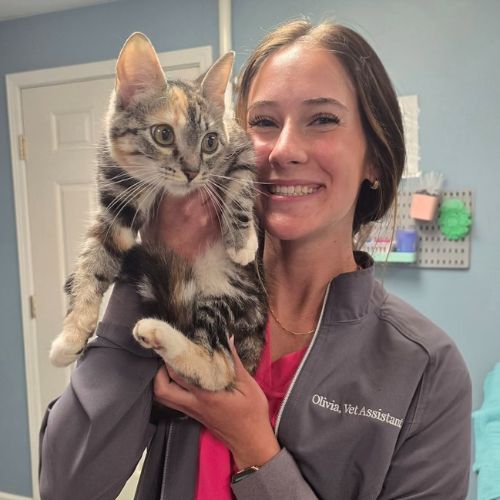
At Staunton River Vet Clinic, we provide professional spay and neuter services for pets in Moneta, VA to support long-term health and responsible pet ownership. These routine procedures help reduce the risk of certain cancers, prevent unwanted litters, and improve behaviors such as roaming, marking, and aggression. Our experienced veterinary team is committed to delivering safe, compassionate care, ensuring your pet’s comfort and a smooth recovery every step of the way.
Frequently Asked Questions
Why should I get my dog neutered?
- To reduce the risk of cancer
- To reduce escaping and roaming
- To reduce aggression
- To prevent unwanted litters
- To improve focus during training
*Dogs that are kept intact for breeding should be fixed as soon as they are done being bred
Why should I get my dog spayed?
- To reduce the risk of cancer
- To reduce escaping and roaming
- To reduce dog fights
- To prevent unwanted litters
- So you don’t have to deal with a dog in heat
- To eliminate the risk of pyometra (a common, deadly uterus infection)
*Dogs that are kept intact for breeding should be fixed as soon as they are done being bred
Why should I get my cat neutered?
- To reduce cat fights
- To reduce unwanted behaviors like spraying urine
- To reduce escaping and roaming
- To reduce unwanted litters
Why should I get my cat spayed?
- To prevent unwanted litters
- So you don’t have to deal with a cat in heat
- To reduce escaping and roaming
- To reduce cat fights
- To reduce the risk of cancer
- To eliminate the risk of uterine infection
Isn’t it best to let a dog have one litter so she’ll calm down?
No. That’s an old-wives tale. Dogs calm down after having a litter because they are older, not because of the litter.
When should I get my dog/cat spayed/neutered?
At approximately 4 to 6 months for most pets. Giant breed dogs may benefit from waiting longer to fix. We can fix feral kittens as long as they weigh at least 2 pounds (8 weeks old).
How long after a dog/cat has babies should it be spayed?
Once the babies are weaned and the milk has dried up.
Can a dog be spayed while she is in heat?
Yes, but dogs in heat bleed excessively during surgery, and all of the organs are swollen. We recommend waiting 4 weeks after the vaginal discharge has stopped. If your dog is in heat during the spay, there will be additional fees due to increased difficulty and the need for more materials.
Can a cat be spayed while she is in heat?
Yes, there are additional fees as with dogs.
Can you spay a dog while she is pregnant?
Sometimes. Spaying in early pregnancy is relatively safe. Once a dog is obviously pregnant, it’s less traumatic for her to deliver the puppies then be spayed once they are weaned. There is an additional charge when we need to spay a pregnant dog.
Can you spay a cat while she is pregnant?
Yes. Pregnant cats should definitely be spayed, even if they are in late pregnancy (remember that there is a HUGE overabundance of kittens available for adoption in our area). Spaying is less invasive earlier on in pregnancy, so get your cat spayed as soon as possible. There is an additional charge when we need to spay a pregnant cat.
Why should I get my cat’s ear trimmed with a spay/neuter?
The tip of the left ear is removed to show that a cat has been fixed. This is very important when cats are caught in traps for Trap-Neuter-Release programs. If a cat with an ear trimmed is caught, the trapper just releases the cat, knowing that it has already been done. This is very important to do if your cat ever goes outside, where it may be caught. Otherwise, it might be trapped and anesthetized before discovering that it is already fixed which causes unnecessary stress on the cat and wastes resources. This is an elective option unless surgery is performed on a feral cat surgery day.
Why should I get my dog/cat tattooed with a spay/neuter?
The tattoo is a short green line on the abdomen (for females) or beside the scrotum (for males). The tattoo is proof that your pet has been neutered. This is important because you can’t always tell by looking for scars or the lack of testicles if a dog has been fixed because scars fade and some dogs are cryptorchid (internal testicles). It is a good idea and can help prevent unnecessary future surgery in the event that your pet is lost or if a surgeon has to operate in an emergency without knowing the full history of your pet. This is especially important for cats, because they are frequently caught in traps for Trap-Neuter-Release programs. If we see a tattoo when we shave for surgery, we know the cat has already been fixed and that it can just be released where it was trapped. Cats that don’t have the left ear trimmed should definitely get a tattoo, and even those with a trimmed ear should also have a tattoo as back up. This is an elective option.
Is there a “Plan B” for dogs after an accidental breeding?
No. The only options are to 1) let the pregnancy proceed and have the puppies, or to 2) spay the dog while pregnant and abort the puppies. In the cases of inbreeding, females under a year old, or mismatched breeding the latter should be chosen.
Are there non-surgical options for chemical castration/spaying?
No. At least, there are none that are good alternatives. The only approved product in the US is Zeuterin, which can only be used in male dogs. It is only intended to be used on street dogs and is not for pets. It does not reduce testosterone production, which means that unwanted behaviors and increased cancer risk remain, even if the dog is rendered sterile.